
The Meaning of the Mexican Flag Colors: A Complete Guide
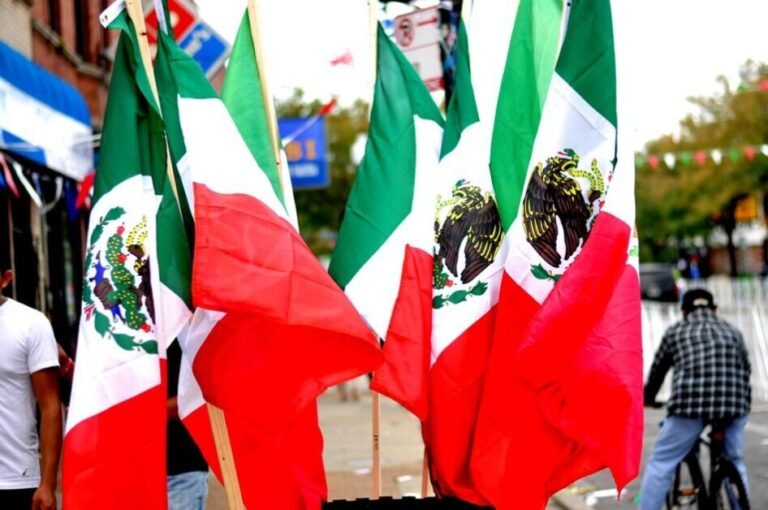
The Mexican flag colors—green, white, and red—are among the most iconic and instantly recognizable symbols in the world. Whether displayed during the World Cup or fluttering above a government building, the tricolor banner evokes a strong sense of national pride. But while the visual design is familiar to many, the history behind it is often misunderstood.
Most people assume the colors have always stood for hope, unity, and blood, but the original meanings were actually rooted in specific religious and independence treaties from the 19th century. As noted by Encyclopaedia Britannica, the symbolism of the flag has shifted significantly alongside the country’s political evolution. In this guide, we will explore the fascinating history of Mexico’s flag, distinguishing between its religious origins and the modern secular meanings embraced by the nation today.
The Basics: What is the Mexican Tricolor?
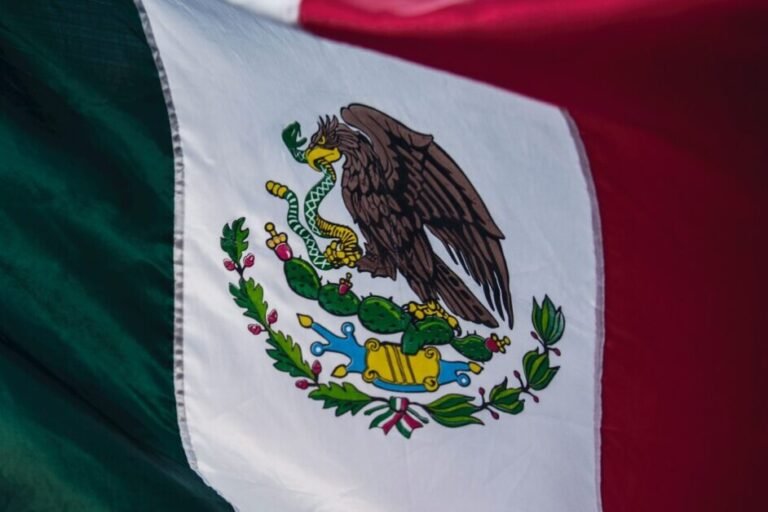
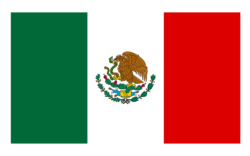
Visually, the flag consists of three vertical bands of equal size: green on the hoist side, white in the center, and red on the fly side. In the center of the white band sits the national coat of arms—an eagle devouring a snake while perched on a cactus. While the layout might seem simple, the specifications are strictly regulated under the Ley sobre el Escudo, la Bandera y el Himno Nacionales (The Law on the National Arms, Flag, and Anthem).
Although the general design of the “tricolor” has been in use since the end of the War of Independence in 1821, the exact version we see today is relatively modern. The current flag was officially adopted on September 16, 1968, partly to establish a uniform standard ahead of the Mexico City Olympic Games. As detailed by the CIA World Factbook, while the basic colors have remained consistent for two centuries, the artistic details of the central coat of arms have evolved several times to reflect different political eras.
The Evolution of the Meaning of Mexican Flag Colors: Then vs. Now
The most common question about the Mexican flag colors is, “What do the colors mean?” The answer depends entirely on which era of history you are looking at. While the colors themselves have remained constant since 1821, the values they represent underwent a radical shift in the mid-19th century.
The Original Meanings (1821 – The Army of the Three Guarantees)
When Mexico first gained independence from Spain, the “Plan of Iguala” was established to ensure peace in the new nation. The colors were chosen to represent the “Three Guarantees” of this treaty. As described by History.com, the original symbolism was:
Green: Represented Independence (Independencia), specifically the separation from Spain.
White: Represented Religion (Religión), symbolizing the purity of the Roman Catholic faith which was declared the sole religion of the new state.
Red: Represented Union (Unión), signifying the blood ties and friendship between the European-born Spaniards and the American-born Mexicans (Criollos).
The Modern Meanings (Benito Juárez & Secularization)
In the mid-1800s, Mexico underwent a period of massive political reform known as La Reforma, led by President Benito Juárez. A key goal of this movement was the separation of church and state. Consequently, the religious meaning of the “White” band was removed.
While there is no single “official” law today that strictly defines the colors (interpretations can vary by source), the widely accepted modern meanings taught in Mexican schools are:
Green: Represents Hope (Esperanza) for the nation’s future.
White: Represents Unity (Unidad) of the people.
Red: Represents the Blood of Heroes (La sangre de los héroes) who died fighting for the country’s freedom.
The Centerpiece: The Mexican Coat of Arms
The emblem centered on the white band is what truly distinguishes the Mexican flag from other tricolors. It is not merely a heraldic design, but a direct retelling of the founding myth of the Aztec empire (the Mexica people).
According to ancient legend, the wandering Mexica tribes were instructed by their deity, Huitzilopochtli, to establish their permanent home only when they encountered a specific sign: an eagle perched on a prickly pear cactus, devouring a snake. As detailed by the World History Encyclopedia, the tribes reportedly found this exact scene on a small, swampy islet in the middle of Lake Texcoco in 1325.
They built their city, Tenochtitlan, on that spot. Today, that location is the heart of Mexico City. The symbolism of the coat of arms breaks down as follows:
The Eagle: Represents the sun and the warrior spirit.
The Snake: Often interpreted as representing the earth or potential enemies being defeated.
The Cactus: Represents the geography of the Mexican landscape growing from the stone in the water.
Common Misconception: Is it the Italian Flag?
At first glance, the flags of Mexico and Italy look nearly identical. This confusion is so common that, historically, it actually caused problems for merchant ships at sea, which is one reason Mexico eventually mandated that even its civil flag must include the coat of arms.
While they share the same green-white-red palette, there are three critical technical differences that distinguish them:
The Aspect Ratio (Shape): The most subtle but structurally significant difference is the shape. As noted by Boundless Roads, the Mexican flag has a ratio of 4:7, making it longer and more rectangular. In contrast, the Italian flag uses a 2:3 ratio, giving it a squarer appearance.
The Shades of Color: If you place them side-by-side, you will notice that the Mexican flag uses darker, richer shades of green and red. The Italian green is generally lighter (often described as “fern green”), while the Mexican green is deeper.
The Coat of Arms: The most obvious differentiator is the central emblem. Italy’s flag is a plain tricolor (since 1946), while Mexico’s always features the complex Eagle and Snake emblem in the center.
Interesting Facts About the Mexican Flag
Beyond the history and symbolism, there are several unique protocols and facts that make the Mexican flag special. Here are a few things most people don’t know:
It Has Its Own Holiday: Mexico celebrates Día de la Bandera (Flag Day) every year on February 24th. This date was chosen because it marks the anniversary of the Plan of Iguala (1821), which first established the country’s independence and the original tricolor design.
The “Golden” Eagle: While early Aztec codices (like the Codex Mendoza) depicted various birds, the modern flag officially features the Golden Eagle (Águila Real or Aquila chrysaetos). It is a symbol of the sun and power, distinct from the Bald Eagle used by its northern neighbor.
The Unique Salute: In many countries, civilians place their right hand over their heart to salute the flag. In Mexico, the Saludo Civil is distinct: civilians stand at attention and place their right hand horizontally across the chest with the palm facing down. This gesture symbolizes a promise to protect the flag and the nation.
Mexican Flag Colors Conclusion
The Mexican flag is far more than just a colorful banner; it is a living timeline of the nation’s history. From the religious guarantees of the 19th century to the secular hopes of the modern republic, the Green, White, and Red have evolved alongside the Mexican people.
Next time you see the tricolor waving—whether at a football match or on a government building—you’ll know that it tells the story of an ancient legend, a fight for independence, and a lasting hope for the future.
Frequently Asked Questions (FAQ)
Q. What do the colors mean today versus in the past?
A. Historically, they represented Independence (Green), Religion (White), and Union (Red). Today, under secular government tradition, they represent Hope (Green), Unity (White), and the Blood of Heroes (Red).
Q. What kind of bird is on the Mexican flag?
A. It is a Golden Eagle (Águila Real). In the Aztec legend, the eagle represented the sun and the god Huitzilopochtli. It is distinct from the Bald Eagle found in the United States.
Q. Is the Mexican flag the same as the Italian flag?
A. No. While they share the same colors, the Mexican flag is darker, has a different aspect ratio (it is longer and thinner), and always includes the central coat of arms. The Mexican government strictly regulates the specific tones and dimensions to maintain this distinction.
Q. When is Mexican Flag Day?
A. Mexico celebrates Día de la Bandera on February 24th. This date honors the signing of the Plan of Iguala in 1821, which is considered the moment the first tricolor flag was created.