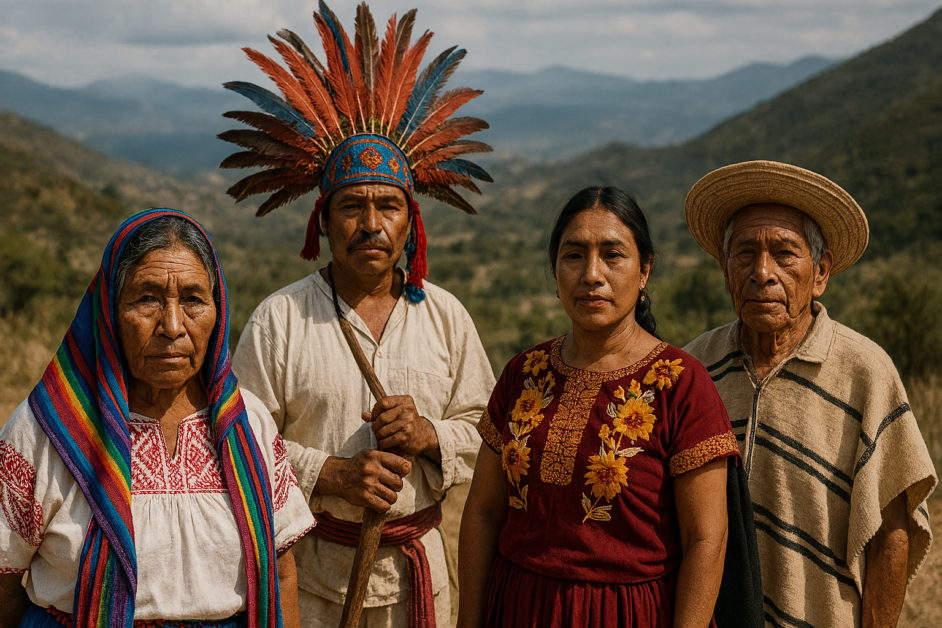
Indigenous Tribes of Mexico A-Z: From the Aztecs to the Zapotecs
Introduction
The indigenous tribes of Mexico represent a living, breathing tapestry of history that defines the nation’s identity from its northern deserts to its southern jungles. While many travelers are familiar with the monumental ruins of the Aztecs and Mayans, Mexico is actually home to 68 distinct indigenous groups, each with its own language, belief system, and artistic tradition. According to the National Institute of Indigenous Peoples (INPI), over 23 million people in Mexico self-identify as indigenous, making the country one of the most culturally diverse in the Western Hemisphere.
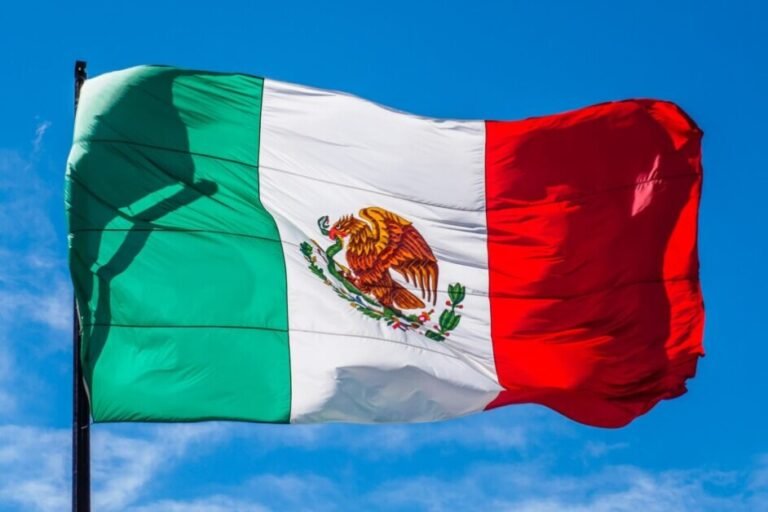
This rich heritage isn’t just found in history books; it is literally woven into the heart of the country’s most sacred symbol. The center of the Mexican flag features an eagle perched on a prickly pear cactus devouring a snake—an image pulled directly from the founding legend of the Mexica (Aztec) people. Understanding these tribes is essential for anyone looking to go beyond the surface of Mexican culture and appreciate the “pluricultural” nature of the modern state, as recognized by the International Work Group for Indigenous Affairs (IWGIA).
In this guide, we will take an A to Z journey through the cultures that shaped Mexico, exploring the legacies of tribes ranging from the legendary Aztecs of the central highlands to the master weavers of the Zapotec people in Oaxaca. First we will highlight featured tribes, followed by a table with the complete list.
Featured Indigenous Tribes of Mexico – (A to H)
The first stretch of our alphabetical journey takes us from the high-altitude valleys of central Mexico to the rugged Sierra Madre mountains. These groups laid the groundwork for Mexico’s agricultural innovations and spiritual depth.
Aztecs (Mexica)
Perhaps the most famous of all indigenous tribes of Mexico, the Aztecs (who referred to themselves as the Mexica) were the architects of the massive empire that met the Spanish in 1519. Their capital, Tenochtitlán, was a marvel of engineering built on Lake Texcoco. Their legacy is most visible today on the national flag; the legend of the eagle and serpent marks the spot where they were told to build their home. You can learn more about their archaeological legacy at the Templo Mayor Museum site.
Cora (Nayeri)
Living in the state of Nayarit, the Cora people are renowned for maintaining a high degree of cultural autonomy. They have a complex syncretic religion that blends ancient cosmic beliefs with Catholicism. Their “Holy Week” (Semana Santa) rituals are among the most visually striking in the world, featuring body paint and ritual battles that symbolize the struggle between light and darkness.
Guarijío (Macurawe)
Residing in the borderlands between Sonora and Chihuahua, the Guarijío are one of the smaller and more isolated groups. They are recognized for their traditional “Tuguri” dance and their resilience in preserving their language despite the pressures of modernization. The Center for Biological Diversity has often highlighted the importance of indigenous lands like those of the Guarijío for environmental conservation.
Huichol (Wixárika)
The Huichol are world-renowned for their vibrant, psychedelic art. Using tiny glass beads or colored yarn, they create intricate “nierikas” (votive offerings) that depict their spiritual visions and the sacred peyote cactus. Their pilgrimage to Wirikuta, a sacred desert in San Luis Potosí, is a fundamental part of their identity. Their artistry and land rights are frequently documented by organizations like Cultural Survival.
Featured Indigenous Tribes of Mexico – (I to P)
The middle of our alphabet takes us into the lush jungles of Chiapas and the high plateaus of central Mexico, where some of the most populous and culturally significant indigenous tribes of Mexico continue to shape the nation’s character.
Kiliwa
Residing in the state of Baja California, the Kiliwa are one of the most critically endangered ethnic groups in the country. With only a handful of native speakers remaining, they represent a vital link to the ancient nomadic traditions of the peninsula. Efforts to document their unique oral histories and language are supported by organizations focused on cultural resilience, such as Cultural Survival.
Lacandón (Hach Winik)
The Lacandón people are the ancestral guardians of the Selva Lacandona in Chiapas. Having lived in isolation for centuries, they maintain a profound spiritual connection to the rainforest. Today, they are key partners in environmental preservation, working with groups like Conservation International México to protect the biodiversity of their jungle home from deforestation.
Maya
As one of the most globally recognized civilizations, the Maya legacy remains a pillar of modern Mexican identity. Millions of Maya descendants continue to live in the Yucatan Peninsula and Chiapas, preserving their languages and traditional “milpa” agriculture. For an interactive look at their advanced astronomical and mathematical knowledge, the Smithsonian National Museum of the American Indian offers an excellent “Living Maya Time” resource.
Mixtec (Ñuu Savi)
Known as the “People of the Rain,” the Mixtec are masters of the Oaxacan highlands. Historically famous for their intricate codices and goldwork, modern Mixtec communities are celebrated for their sophisticated palm weaving and textile arts. Their struggle for land rights and autonomy is a major focus for international human rights monitors like IWGIA.
Otomí (Hñähñu)
The Otomí people, primarily based in central Mexico, are the creators of the world-famous Tenango embroidery—vibrant, multi-colored designs that depict the flora and fauna of their region. These textiles are more than just art; they are a visual language that has protected Otomí heritage for generations.
Purépecha
Centered in the state of Michoacán, the Purépecha successfully resisted Aztec expansion for centuries. They are renowned for their unique language (a linguistic isolate) and their spectacular Day of the Dead traditions around Lake Pátzcuaro. Their artisanal skills in hammered copper and woodworking remain some of the finest examples of indigenous craftsmanship in North America.
Featured Indigenous Tribes of Mexico – (Q to Z)
The final leg of our A–Z journey highlights the resilience and artistry of indigenous tribes of Mexico that inhabit some of the country’s most extreme landscapes, from the deep canyons of the north to the fertile valleys of the south.
Rarámuri (Tarahumara)
Famous worldwide as the “super-athletes” of the Sierra Madre, the Rarámuri reside in the rugged Copper Canyon of Chihuahua. The name Rarámuri translates to “those who run fast,” a nod to their tradition of long-distance running in thin-soled sandals. Their culture and endurance are extensively documented in research archives like the Milwaukee Public Museum Tarahumara Resources.
Seri (Comcaac):
A small but culturally powerful group living on the desert coast of Sonora and Tiburón Island. They are famous for their intricate ironwood carvings and baskets. Unlike many other groups, the Seri were never fully conquered, allowing them to preserve a unique language and deep knowledge of marine ecology, often studied by the University of Arizona Southwest Center.
Totonac:
Based in the state of Veracruz, the Totonac people were the builders of the magnificent city of El Tajín. They are also the original cultivators of the vanilla bean. Today, they are best known for the “Danza de los Voladores” (Dance of the Flyers), which has been recognized as part of the UNESCO Intangible Cultural Heritage of Humanity.
This video below provides a breathtaking look at the Totonac “flying men” ceremony, illustrating the spiritual depth and physical skill involved in one of Mexico’s most iconic indigenous traditions.
Yaqui (Yoeme)
The Yaqui of Sonora are celebrated for their fierce independence and the “Deer Dance” (Danza del Venado), a ritual representing the hunt that is a cornerstone of northern Mexican folk culture. Their history of resistance and survival is explored in detail by Indigenous Mexico.
Zapotec (Ben ‘Zaa)
The “Cloud People” of Oaxaca are one of the most populous and influential groups in Mexico today. Their ancestors built the hilltop city of Monte Albán. Modern Zapotec culture is a powerhouse of art and commerce, particularly the hand-loomed rugs of Teotitlán del Valle. For archaeological insights, the National Institute of Anthropology and History (INAH) is the definitive Mexican authority.
Indigenous Tribes of Mexico A – Z
Many of these groups are subgroups of larger families (like the Maya or Nahua), but the Mexican government recognizes them as 68 distinct linguistic groups to ensure their specific dialects and traditions are protected.
| Tribe / Ethnic Group | Primary Language Family | Historical Era / Presence |
|---|---|---|
| Amuzgo | Oto-Manguean | Pre-Hispanic - Present |
| Aguacateco | Mayan | Pre-Hispanic - Present |
| Aztec (Nahua) | Uto-Aztecan | 1300s (Empire Peak) - Present |
| Cakchiquel | Mayan | Pre-Hispanic - Present |
| Chatino | Oto-Manguean | 500 BC - Present |
| Chichimeca Jonaz | Oto-Manguean | Classic Period - Present |
| Chinantec | Oto-Manguean | 1000 AD - Present |
| Chocholtec | Oto-Manguean | Pre-Hispanic - Present |
| Ch'ol | Mayan | 600 AD (Classic Maya) - Present |
| Chontal de Oaxaca | Isolate (Hokan?) | Pre-Hispanic - Present |
| Chontal de Tabasco | Mayan | Pre-Hispanic - Present |
| Chuj | Mayan | Pre-Hispanic - Present |
| Cochimí | Yuman-Cochimí | 10,000+ years (Baja) - Present |
| Cora | Uto-Aztecan | 1000 AD - Present |
| Cucapá | Yuman-Cochimí | Pre-Hispanic - Present |
| Cuicatec | Oto-Manguean | Pre-Hispanic - Present |
| Guarijío | Uto-Aztecan | Pre-Hispanic - Present |
| Huastec (Teenek) | Mayan | 1000 BC - Present |
| Huave | Isolate | 3000+ years - Present |
| Huichol (Wixárika) | Uto-Aztecan | 1500 BC - Present |
| Ixcatec | Oto-Manguean | Pre-Hispanic - Present |
| Ixil | Mayan | Pre-Hispanic - Present |
| Jakaltek | Mayan | Pre-Hispanic - Present |
| Kanjobal | Mayan | Pre-Hispanic - Present |
| Kekchí | Mayan | Pre-Hispanic - Present |
| Kiliwa | Yuman-Cochimí | Pre-Hispanic - Present |
| Kickapoo | Algic (Algonquian) | 1800s (Migration) - Present |
| Kumiai | Yuman-Cochimí | Pre-Hispanic - Present |
| Lacandón | Mayan | Pre-Hispanic - Present |
| Mame | Mayan | Pre-Hispanic - Present |
| Matlatzinca | Oto-Manguean | 1200 AD - Present |
| Maya | Mayan | 2000 BC - Present |
| Mayo | Uto-Aztecan | Pre-Hispanic - Present |
| Mazahua | Oto-Manguean | 1200 AD - Present |
| Mazatec | Oto-Manguean | 800 AD - Present |
| Mixe | Mixe-Zoquean | 1300 BC (Olmec links) - Present |
| Mixtec | Oto-Manguean | 1500 BC - Present |
| Motocintleco | Mayan | Pre-Hispanic - Present |
| Nahuatl (Nahua) | Uto-Aztecan | 1200 AD - Present |
| Olutec | Mixe-Zoquean | Pre-Hispanic - Present |
| Otomí | Oto-Manguean | 1000 BC - Present |
| Paipai | Yuman-Cochimí | Pre-Hispanic - Present |
| Pame | Oto-Manguean | 13th Century - Present |
| Pápago | Uto-Aztecan | Pre-Hispanic - Present |
| Pima Bajo | Uto-Aztecan | Pre-Hispanic - Present |
| Popoluca | Mixe-Zoquean | 1000 BC (Olmec links) - Present |
| Popoloca | Oto-Manguean | 900 AD - Present |
| Purépecha | Isolate | 1000 AD - Present |
| Q'anjob'al | Mayan | Pre-Hispanic - Present |
| Quiché | Mayan | Pre-Hispanic - Present |
| Rarámuri | Uto-Aztecan | Pre-Hispanic - Present |
| Seri | Isolate | Pre-Hispanic - Present |
| Tarahumara | Uto-Aztecan | Pre-Hispanic - Present |
| Tarahumara Norte | Uto-Aztecan | Pre-Hispanic - Present |
| Tarasco | Isolate | 1200 AD - Present |
| Teco | Mayan | Pre-Hispanic - Present |
| Tepehua | Totonacan | Pre-Hispanic - Present |
| Tepehuán Norte | Uto-Aztecan | Pre-Hispanic - Present |
| Tepehuán Sur | Uto-Aztecan | Pre-Hispanic - Present |
| Tlapanec | Oto-Manguean (Subtiaba) | Pre-Hispanic - Present |
| Tojolabal | Mayan | Pre-Hispanic - Present |
| Totonac | Totonacan | 100 AD - Present |
| Trique | Oto-Manguean | Pre-Hispanic - Present |
| Tseltal | Mayan | Pre-Hispanic - Present |
| Tsotsil | Mayan | Pre-Hispanic - Present |
| Yaqui | Uto-Aztecan | Pre-Hispanic - Present |
| Zapotec | Oto-Manguean | 1500 BC - Present |
| Zoque | Mixe-Zoquean | 1500 BC - Present |
Conclusion: A Living Legacy on the Mexican Flag
The indigenous tribes of Mexico are not merely figures of the past; they are the architects of the nation’s present and future. From the linguistic diversity of the 68 recognized national languages to the vibrant textiles sold in global markets, their influence is everywhere.
Perhaps the most profound tribute to this heritage is found on the Mexican flag. The central emblem—the eagle, the serpent, and the cactus—is a direct link to the Aztec (Mexica) foundation myth of Tenochtitlán. By displaying this symbol, Mexico acknowledges that its modern identity is rooted in the strength and spirituality of its native peoples. Protecting these cultures, languages, and lands is essential to maintaining the “pluricultural” heart of Mexico that makes it so unique on the world stage.
Frequently Asked Questions (FAQ)
Q. What is the most spoken indigenous language in Mexico?
A. Nahuatl (the language of the Aztecs) is the most widely spoken, with approximately 1.7 million speakers. It is followed by Maya, Zapotec, and Mixtec.
Q. Are the Aztecs and Mayans still around?
A. Yes. While their ancient empires have fallen, their descendants are very much alive. Millions of people in Mexico identify as Maya or Nahua (Aztec descendants) and continue to practice many of their ancestral traditions today.
Q. Where is the best place to visit to learn about indigenous tribes of Mexico?
A. Oaxaca is often considered the cultural heart of indigenous Mexico due to its dense population of Zapotec and Mixtec communities. Chiapas (Maya and Lacandón) and Michoacán (Purépecha) are also excellent regions for experiencing living indigenous culture.
Q. Why is the indigenous history important to the Mexican flag?
A. The symbol in the center of the flag represents the founding of Tenochtitlán by the Mexica people. It serves as a permanent reminder that Mexico's sovereign identity was built upon a sophisticated indigenous civilization long before the arrival of Europeans.