
The 12 Most Common Scams in Cancun That Could Ruin Your Vacation
Introduction
While Cancun is a world-class paradise, being aware of common scams in Cancun is the best way to ensure your dream vacation doesn’t turn into a financial headache. From the moment you land at the airport to your final sunset dinner in the Hotel Zone, being an informed traveler is your greatest defense. Most locals are incredibly welcoming, but the high volume of visitors inevitably attracts a few bad actors looking to exploit the excitement of a holiday.
Before you set off, it is always wise to check the U.S. Department of State’s Mexico Travel Advisory for the latest safety updates and regional guidance. By understanding how these schemes work, you can navigate the Yucatan Peninsula with the confidence of a local and keep your focus where it belongs: on the turquoise waters and ancient ruins.
The 12 Most Common Scams in Cancun
1. The Airport “Shark Tank” Greeters
The most overwhelming introduction to common scams in Cancun happens just after you clear customs and before you reach the actual exit of the airport. This transit area is widely known as the “Shark Tank.” Here, dozens of polished, official-looking representatives will aggressively try to stop you. Many wear uniforms that resemble those of airport staff or major airlines, and they may even carry clipboards and iPads to appear legitimate.
Their most common tactic is to ask, “Who is your transportation with?” or to tell you that your pre-booked shuttle has already left. In reality, they are high-pressure timeshare salespeople. If you stop to talk, they will offer you “free” breakfast, deeply discounted excursions, or even cash just to attend a “90-minute presentation,” which often ends up consuming your entire first day.
How to Avoid This Scam:
Keep Walking: Do not stop for anyone inside the terminal building after you collect your luggage.
Don’t Show Your Voucher: Never show your pre-booked transportation voucher to anyone inside. Real shuttle companies are prohibited from waiting inside the terminal; they are only allowed to meet you at the designated area outside.
Trust the Official Map: Familiarize yourself with the official Cancun Airport terminals so you know exactly where to find the ground transportation exit.
Book Ahead: Always use a reputable, pre-arranged service like USA Transfers or Happy Shuttle Cancun, as they will provide you with specific instructions and photos of what their representatives’ uniforms look like.
2. The Gas Station “Fast Fingers” Swap
If you choose to rent a car, the gas station is one of the most frequent places where you might encounter common scams in Cancun. In Mexico, all gas stations (primarily the national brand, Pemex) are full-service, meaning an attendant will pump the gas for you. While convenient, this provides several opportunities for a “fast fingers” sleight-of-hand.
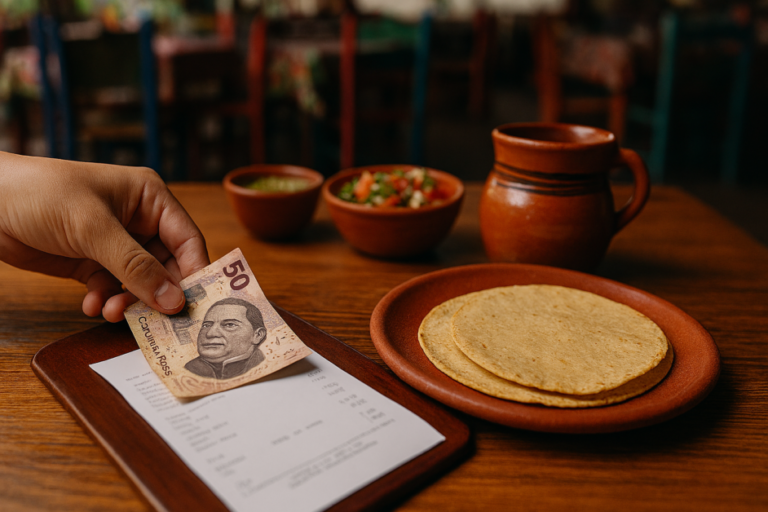
The most notorious version is the currency swap. Because the 500-peso note and the 50-peso note share a similar blueish-violet color, an attendant may take your 500-peso bill, quickly turn away or distract you, and then turn back holding a 50-peso bill, claiming you made a mistake. Another variation involves the attendant failing to “zero out” the pump from the previous customer, causing you to pay for their fuel in addition to your own.
How to Avoid This Scam:
The “Zero” Check: Before they start pumping, look at the display and ensure it reads “0.00.” It is standard practice to point at the screen and say “Cero” to let the attendant know you are watching.
Announce Your Cash: If paying with cash, hold the bill up and say the denomination out loud: “Quinientos pesos” (500 pesos). Do not hand it over until you are sure they have acknowledged the amount.
Watch for Distractions: Be wary if a second person approaches your window to wash your windshield or sell you a snack while the first person is handling the payment.
Use Credit Cards Carefully: If you pay by card, never let the machine leave your sight. Handheld “skimmers” or double-charging are risks at less-reputable stations.
Review Local Guides: For more detailed driving advice, the Mexpro Mexico Travel Blog offers an excellent breakdown of road safety and gas station etiquette.
3. The “Broken” Taxi Meter
One of the most frequent common scams in Cancun involves the city’s taxi system. Unlike many major cities where fares are calculated by a meter, Cancun taxis—especially those operating in the Hotel Zone and near major tourist hubs—rarely use them. Instead, they operate on a government-mandated zone system. However, many drivers will take advantage of a tourist’s lack of knowledge by quoting an arbitrary, inflated price that can be double or triple the actual rate.
If you ask about a meter, a driver might simply say it is “broken” or that “meters aren’t used here.” While technically the latter is often true for the Hotel Zone, the lack of transparency allows for the “gringo tax” to be applied. Additionally, be aware that while Uber is legally permitted to operate in Cancun, there has been long-standing tension between ride-share drivers and the taxi unions, making ride-share pickups at certain hotels or the airport a bit complicated.
How to Avoid This Scam:
Negotiate First: Never get into a taxi without agreeing on the price. Ask, “¿Cuánto cuesta a [Destination]?” (How much to…?).
Ask for the Rate Card: All authorized taxi drivers are required to carry an official rate card (tarifario). If the price seems high, ask to see it.
Use the Bus: For travel within the Hotel Zone, the R1 and R2 public buses are incredibly cheap, frequent, and safe. You can find more about the Cancun bus system and routes to save significantly on transport.
Consult Your Concierge: Before leaving your hotel, ask the front desk or concierge what the standard taxi fare should be to your destination. They can often call a trusted “sitio” taxi for you.
Read Transportation Guides: Familiarize yourself with the Frommer’s guide to navigating Cancun for more expert tips on local transit and avoiding overcharges.
4. The “Free” Breakfast Timeshare Trap
The “free” breakfast or “VIP” tour is perhaps the most time-consuming of the common scams in Cancun. It often begins with a friendly, charismatic local approaching you in a hotel lobby, on the beach, or near a popular shopping plaza like La Isla. They will offer you incredible perks—such as free tickets to Xcaret, a deep discount on a catamaran tour, or a lavish buffet breakfast—in exchange for “just 90 minutes” of your time to preview a new resort.
In reality, these “previews” are high-pressure sales environments for vacation clubs or timeshares. Once you are inside the resort, the promised 90 minutes frequently stretches into four or five hours. Sales reps are trained to be relentless, using psychological tactics to make you feel like you are missing out on a once-in-a-lifetime investment. Many travelers report feeling “trapped” or bullied into signing contracts they later regret.
How to Avoid This Scam:
Remember the “Golden Rule”: If someone you don’t know offers you something for free in a high-traffic tourist area, there is almost always a catch.
Just Say No: A firm but polite “No, gracias” is the most effective way to end the conversation. Don’t feel obligated to be “nice” if they continue to follow you.
Know the Legals: If you do find yourself having signed a contract under pressure, the Mexican Consumer Protection Agency (PROFECO) provides a “cooling-off” period (usually five business days) during which you can legally cancel a timeshare contract without penalty.
Research Resorts Ahead of Time: Before booking any “discounted” packages, check sites like TripAdvisor to see if other travelers have flagged specific resorts for aggressive sales tactics.
Stick to Reputable Tour Operators: Book your excursions directly through established companies like Xcaret Park or your hotel’s official concierge to avoid being funneled into a sales pitch.
5. The Police “Quick Fine” Bribe
Encounters with local law enforcement can be intimidating, which is exactly what makes the “quick fine” or mordida (the bite) one of the most effective common scams in Cancun. Typically, a tourist in a rental car is pulled over for a minor or even fabricated traffic violation, such as failing to come to a complete stop or driving slightly over the speed limit. The officer may then explain that the fine is very expensive and requires you to hand over your driver’s license, which you can only retrieve by visiting a police station the following day.
To “save you the trouble,” the officer might suggest that you can pay a smaller “fine” in cash directly to them right then and there. While it may seem like a convenient way to resolve the issue, paying a bribe is illegal in Mexico and only encourages the targeting of more travelers.
How to Avoid This Scam:
Know the “Courtesy Ticket” Law: Under Article 241 of the Quintana Roo Transit Regulations, tourists are actually entitled to two “courtesy warnings” for minor infractions before a monetary fine can be issued.
Ask for a Written Ticket: If you have committed a genuine infraction, politely ask for a written citation (una multa por escrito). Legitimate tickets are paid at the municipal police station or occasionally online, never to an individual officer on the side of the road.
Request to Go to the Station: If an officer insists on cash, suggest that you would prefer to follow them to the nearest police station (la comandancia) to settle the matter officially. Often, a scammer will let you go rather than deal with the paperwork and oversight at the station.
Stay Calm and Respectful: Always remain polite. For a comprehensive look at your rights and general safety, the Government of Canada’s Mexico Travel Advice provides excellent tips on how to handle interactions with local authorities.
Don’t Hand Over Your Passport: While you must show your driver’s license, you are not required to give up your physical passport on the street. Keep a high-quality photocopy or a digital version on your phone for these situations.
6. The Rigged ATM / “Helpful” Stranger
While modern technology makes traveling easier, it also facilitates one of the most sophisticated common scams in Cancun: ATM skimming. Criminals often target independent, unbranded ATMs found in convenience stores, pharmacies, or on the street in the Hotel Zone. These machines may be fitted with “skimmers”—small, nearly invisible devices placed over the card slot that read your card’s magnetic strip—and pinhole cameras hidden above the keypad to record your PIN.
In another variation, a “helpful” local might linger near an ATM and offer advice on how to avoid high transaction fees. Their real goal is “shoulder surfing,” or watching you enter your PIN so they can later steal your physical card or use cloned data. Once they have both your card info and your PIN, they can drain your account in minutes.
How to Avoid This Scam:
Use Only Bank-Affiliated ATMs: Stick to machines located physically inside a bank branch or a secure, high-traffic shopping center. Reliable locations include the ATMs at Chedraui Selecto, La Isla Shopping Village, or Plaza Kukulcan.
Wiggle the Reader: Before inserting your card, give the card reader a firm tug. If it feels loose or looks like it was glued on, do not use it. Legitimate ATM parts are integrated into the machine and should not move.
Decline the ATM’s Exchange Rate: Many ATMs will offer to do the currency conversion for you (Dynamic Currency Conversion). This is a “hidden” scam of sorts, as the rate is almost always 5–10% worse than what your bank would give you. Always select “Decline” or “No” when asked if you accept their conversion rate; your bank will still process the transaction in pesos at a better rate.
Cover Your Hand: Always use your free hand to completely shield the keypad while you type your PIN, even if you think you are alone.
Monitor Your Accounts: Use a banking app that provides instant notifications for every transaction. For more on protecting your digital finances abroad, the N26 Mexico Travel Guide offers excellent advice on using debit cards safely.
Follow Expert Safety Tips: Mexperience provides a comprehensive breakdown of how to manage cash and card security specifically within the Mexican banking landscape.
7. The Restaurant Bill “Propina” Pad
Dining out is a highlight of any trip to Mexico, but you should stay vigilant for common scams in Cancun related to your final bill. The most frequent issue is the “Propina” (tip) padding. In many restaurants, especially in high-traffic areas like the Hotel Zone or Fifth Avenue in nearby Playa del Carmen, the waiter may automatically include a 15% or 20% service charge—labeled as “Servicio” or “Propina”—directly into the total amount.
The scam occurs when the server brings you the bill but doesn’t mention the included charge, or they leave the “tip” line on the credit card slip blank, hoping you will add another 15-20% on top of what you’ve already paid. While tipping is culturally expected for good service, making it mandatory or hiding it in the bill total is actually against the law in Mexico.
How to Avoid This Scam:
Scan for “Propina” or “Servicio”: Before paying, look closely at the itemized list on your receipt. If you see an amount added for “Propina” or “Servicio,” the tip is already included.
Know the Difference Between IVA and Tip: You will always see a 16% charge for IVA (Value Added Tax). This is a legitimate government tax and is mandatory. Do not confuse this with a tip.
Verify the Math: Occasionally, the “Total” at the bottom of the bill doesn’t match the sum of the items listed above it. Take ten seconds to do a quick mental check of the addition.
Understand Your Rights: The Mexican Consumer Protection Agency (PROFECO) explicitly states that restaurants cannot legally demand a tip or include it in the bill without your consent.
Tipping Standards: If the service was good and a tip was not included, the local standard is typically 10% to 15%. For a detailed breakdown of current customs, TripAdvisor’s Mexico Tipping Guide provides excellent peer-reviewed advice.
Ask for “La Cuenta”: When you are ready to leave, ask for “La cuenta, por favor” (the check, please). If you notice an unauthorized service charge, you are well within your rights to ask them to remove it so you can leave a voluntary tip instead.
8. The “Mayan Dollar” Souvenir Trick
When exploring the vibrant markets or visiting ancient ruins, you may encounter one of the more creative common scams in Cancun and the surrounding Riviera Maya: the “Mayan Dollar” trick. This usually begins with a vendor shouting, “Only one dollar!” to grab your attention as you walk by a stall of colorful wood carvings or stone masks. However, when you go to pay with a single US dollar bill, the vendor will suddenly claim they meant “one Mayan dollar”—a completely fictional currency they value at $10, $20, or even $50 USD.
This tactic is particularly prevalent at high-traffic archaeological sites like Chichén Itzá, where hundreds of vendors line the paths. The goal is to get the item into your hands, making you feel socially obligated or “guilty” into paying the much higher price once the “misunderstanding” is revealed.
How to Avoid This Scam:
Clarify the Currency Immediately: Before you touch an item or agree to a price, ask, “¿Pesos o dólares?” (Pesos or dollars?). If they mention “Mayan dollars,” smile and walk away—it’s a guaranteed setup.
Shop at Fixed-Price Stores: If you want to avoid the stress of haggling and potential scams, consider buying your souvenirs at large supermarkets like Chedraui or Walmart in downtown Cancun, where prices are clearly marked and non-negotiable.
Know the Site Rules: For those planning a day trip, reading this guide on how to avoid scams and hazards at Chichén Itzá from Yucatán Magazine is essential for navigating the vendor gauntlet safely.
Use Local Currency: Vendors are less likely to try the “Mayan Dollar” trick if you are clearly paying in Mexican Pesos (MXN). For more tips on shopping and general safety, Hotels.com’s guide to staying safe in Mexico highlights why you should never pay in “mythic” money.
Be Prepared to Walk: The most powerful tool you have is the ability to walk away. There are thousands of vendors in the region, and you will almost always find the same item at a fair price elsewhere.
9. The Rental Car “Hidden Insurance” Charge
Renting a car is one of the best ways to explore the Yucatan at your own pace, but it is also the source of one of the most frustrating common scams in Cancun. You may find an incredible deal online—sometimes as low as $1 to $5 USD per day—through a major travel booking site. However, when you arrive at the rental counter, the agent will inform you that “mandatory” Mexican insurance is required and will cost an additional $30 to $50 USD per day. If you refuse, they will simply decline to rent you the car.
The “scam” here isn’t the insurance itself—Third-Party Liability (TPL) is indeed required by Mexican law—but rather the lack of transparency from third-party booking sites that omit these mandatory fees to make their rates look more competitive. Even if your credit card provides car rental insurance, most local agencies will only accept it for Collision Damage (CDW), not Liability, and even then, they may require a massive refundable deposit (often $2,500 to $4,000 USD) held on your card.
How to Avoid This Scam:
Book Directly with Transparent Companies: Local favorites like Easy Way Rent a Car or Avant Rent a Car are highly recommended by seasoned travelers because their online quotes typically include all mandatory taxes and insurance.
Get an “All-In” Quote: When booking, ensure the price includes TPL (Third Party Liability). If the price seems too good to be true, it almost certainly excludes this legal requirement.
Bring a Letter of Coverage: If you plan to rely on your credit card for CDW/LDW, bring a printed, official letter from your bank (preferably in Spanish) stating your coverage applies in Mexico. Be prepared for the large deposit hold mentioned above.
Inspect the Vehicle: Before driving away, take a video of the entire car, including the roof, tires, and undercarriage. Vendors may try to charge you for “new” scratches that were already there.
Read Detailed Comparisons: The Mexperience Car Rental Guide provides an excellent breakdown of exactly which insurances are mandatory and which are optional under Mexican law.
10. The Bird Poop / Spilled Drink Distraction
This is one of the oldest and most effective common scams in Cancun, relying entirely on the “yuck factor” and your natural instinct to accept help when in a messy situation. It typically occurs in crowded pedestrian areas, such as the sidewalks near Coco Bongo or busy bus stops. While you are walking, an accomplice will discreetly squirt a substance—usually liquid chocolate, mustard, or a realistic-looking “bird dropping” paste—onto your shoulder, back, or bag.
Seconds later, a “friendly” stranger (or sometimes an elderly couple to lower your guard) will approach you with feigned concern, pointing at the mess and exclaiming about the “bird” or “spill.” They will immediately pull out tissues or wet wipes and begin “helping” you clean it off. In the confusion—often while they encourage you to take off your backpack or jacket to see the damage—their partner-in-crime quickly lifts your wallet, phone, or passport from your pockets or bag.
How to Avoid This Scam:
Maintain Your Personal Space: If a stranger tries to touch you or your clothing to “help” you clean something, immediately step back and firmly say, “No, gracias.” * Do Not Remove Your Bag: Never set your bag on the ground or take it off your shoulders in a public street to inspect a stain. This is the exact moment the theft occurs.
Go to a Secure Location: If you realize you have been hit with a substance, keep walking until you reach the safety of your hotel lobby, a well-lit restaurant, or a retail store with security. Clean the mess yourself in a private restroom.
Awareness is Key: Review the Rick Steves guide to common tourist scams for a deeper look at how professional distraction teams operate globally.
Secure Your Valuables: Keep your most important items in a money belt or an internal zipped pocket that isn’t easily accessible. The World Nomads guide to petty crime in Mexico provides excellent advice on choosing the right gear to deter pickpockets.
11. The “Pesos vs. Dollars” Exchange Rip-off
One of the most widespread yet subtle common scams in Cancun involves the practice of paying for everyday items in US Dollars (USD) rather than Mexican Pesos (MXN). While most businesses in the Hotel Zone will happily accept your dollars, they often do so at an exchange rate that is significantly worse than the official market rate. By paying in USD, you are essentially giving the merchant a 10% to 20% “bonus” on every transaction, which can add up to hundreds of dollars over the course of a week-long vacation.
This is often called a “convenience fee,” but it frequently crosses the line into a scam when prices are quoted in dollars at a fixed, outdated rate (such as 15 pesos to 1 dollar when the actual rate is 18 or 19). Some merchants may even use the “dollar sign” ($) to list prices, which in Mexico actually denotes pesos, leading to intentional confusion when it comes time for the tourist to pay.
How to Avoid This Scam:
Always Pay in Pesos: This is the single most effective way to ensure you are paying the “real” price. Using local currency puts you in control of the transaction.
Check the Mid-Market Rate: Before you head out for the day, check a reliable source like the XE Currency Converter so you know exactly what your money is worth.
Avoid Airport and Hotel Exchange Booths: While convenient, these locations typically offer the worst rates in the city. For a better deal, use a Casa de Cambio (exchange house) in downtown Cancun or a bank-affiliated ATM.
Consult Financial Guides: For a deeper dive into how to manage your money while traveling, the Western Union Mexico Currency Guide provides excellent tips on avoiding high fees and recognizing counterfeit bills.
Understand Currency Customs: Mexperience offers an authoritative breakdown of the best ways to buy and sell pesos to maximize your travel budget.
12. The “Too Good to be True” Jet Ski Rental
Water sports are the heartbeat of the Caribbean, but jet ski rentals are often cited as one of the most persistent common scams in Cancun. The scheme usually unfolds at the end of your rental period. When you return the jet ski to the beach, the vendor will inspect the craft and suddenly point out “new” damage—typically a deep scratch, a cracked hull, or a dent—that they claim wasn’t there before.
The vendor then demands an immediate cash payment for repairs, often ranging from $200 to $500 USD, or they may threaten to hold your passport or call the police. Because you are on vacation and likely in your swimwear without easy access to legal help, many tourists pay the “fine” just to end the confrontation. In many cases, these scratches were already there, or even painted over with temporary material that washes off in the water to reveal “new” damage.
How to Avoid This Scam:
Document Everything: Before you even touch the controls, take a high-quality video or photos of the jet ski from every angle. Point out any existing damage to the vendor and make sure they see you recording it.
Book via Your Hotel or Reputable Hubs: Renting from a random vendor on a public beach is much riskier than booking through an established marina or your resort’s official water sports desk.
Avoid Leaving Your Passport: Never leave your physical passport or a high-value item as collateral. A reputable business will accept a credit card authorization or a small cash deposit instead.
Look for Reviews: Before you head to the beach, check TripAdvisor’s Cancun Water Sports reviews to see which operators have a history of honest dealings.
Know the Rules of the Lagoon: Many experienced travelers prefer renting jet skis in the Nichupté Lagoon, where the water is calmer and the operators are often more regulated. You can find more details on water sports safety and lagoon tours from local specialists.
Consult Global Safety Standards: Review the International Association for Premarket Safety or similar safety-focused travel blogs for general tips on how to handle equipment rental disputes abroad.
Conclusion: Stay Smart, Stay Safe, and Enjoy Cancun
While it’s important to be aware of these common scams in Cancun, don’t let this list discourage you from visiting. Millions of people travel to the Yucatan every year and have a perfectly safe, incredible experience. Scammers target those who look distracted, uninformed, or overly trusting, so simply by reading this guide, you have already made yourself a much “harder” target.
The best defense is a combination of preparation and intuition. Always use reputable services, pay in Mexican Pesos when possible, and never be afraid to walk away from a deal that feels “off.” Cancun is a beautiful destination with world-class hospitality—by staying vigilant, you ensure that your memories are of the white-sand beaches and ancient Mayan history, not of a preventable travel mishap.
Frequently Asked Questions
Q. Is it safe to drink the tap water in Cancun?
A. No, you should not drink tap water in Cancun. While many large resorts have advanced filtration systems, the distribution pipes can still introduce bacteria or parasites. To avoid "Montezuma's Revenge," stick to bottled water for drinking. For an extra layer of safety, many travelers also use bottled water to brush their teeth and are careful not to swallow water while showering. You can learn more about water safety in Mexico to stay healthy during your trip.
Q. Can I use Uber in Cancun to avoid taxi scams?
A. Yes, Uber is legally available in Cancun, but using it can be complicated. Due to ongoing tension between the local taxi unions and ride-share drivers, Uber is often restricted from picking up passengers directly at the airport terminal or at certain hotel lobbies. While it is often cheaper and offers transparent pricing, many visitors choose to pre-book private transportation for their arrival to avoid getting caught in the middle of local disputes.
Q. How much should I tip in Cancun, and in what currency?
A. Tipping is a significant part of the local economy. In restaurants, a tip of 10% to 15% is standard, provided a "Service Charge" hasn't already been added to your bill. For bartenders, $1–$2 USD (or 20–40 Pesos) per round is appreciated. While USD is widely accepted, it is always better to tip in Mexican Pesos. This ensures the staff receives the full value of your gift without having to pay high exchange fees themselves.
Q. What should I do if a police officer asks for a cash bribe?
A. Stay calm and polite, but do not offer or pay a bribe. Ask the officer for a written ticket (una multa) that you can pay at the police station. Often, simply asking to settle the matter officially at the station is enough to make a "scamming" officer let you go. If you are driving a rental car, remember that tourists in the state of Quintana Roo are technically entitled to two courtesy warnings for minor infractions before a fine is issued.
Q. Are the “Free” tours offered at the airport legitimate?
A. These are almost never truly free. They are usually lures for high-pressure timeshare or "vacation club" presentations. While the vouchers for tours or breakfasts are real, you will be required to spend several hours of your vacation in a sales office. If you aren't interested in buying a timeshare, it is best to decline these offers and book your excursions through official park websites or your hotel's authorized travel desk.