The History of Mariachi Music: A Complete Guide for Beginners
Introduction
If you’ve ever heard the history of mariachi music, you know there’s something truly magical about those passionate trumpet calls, soulful violin melodies, and powerful voices singing about love, heartbreak, and Mexican pride. But where did this iconic sound come from? And how did it become one of Mexico’s most treasured cultural exports?
Whether you’ve caught a mariachi band serenading diners at a Mexican restaurant, watched them perform at a wedding, or heard their music in a movie soundtrack, mariachi is everywhere. It’s become the soundtrack to Mexican celebrations and an ambassador of Mexican culture worldwide. In fact, UNESCO recognized mariachi as an Intangible Cultural Heritage in 2011 UNESCO, highlighting just how important this tradition is—not just to Mexico, but to the entire world.
In this complete guide for beginners, we’re going to walk through the fascinating journey of mariachi music from its humble beginnings in rural western Mexico to its current status as a global phenomenon. You’ll discover how this folk tradition transformed into Mexico’s musical calling card, learn about the instruments that create that distinctive mariachi sound, and understand why those elaborate charro suits are so important.
Here’s what we’ll cover: the origins of mariachi in 18th-century Mexico, how it evolved through different historical periods, its golden age during the mid-1900s when it exploded onto radio and film, and how it continues to thrive today with modern innovations and new generations of musicians. Along the way, you’ll get to know the key songs, musical styles, and traditions that make mariachi what it is.
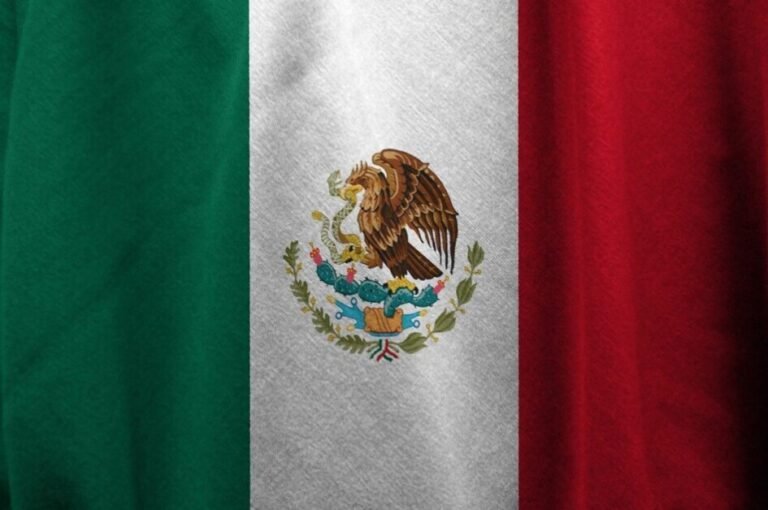
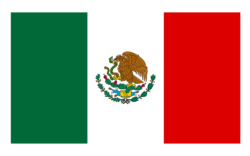
By the end of this guide, you’ll have a solid understanding of mariachi’s rich cultural heritage and maybe even some inspiration to dive deeper into this vibrant musical tradition. Just like Mexico’s national symbols—from the eagle and serpent on the flag to the country’s distinctive green, white, and red colors—mariachi music tells the story of Mexico’s identity, resilience, and soul.
Ready to explore? Let’s jump into the captivating world of mariachi music!
What is Mariachi Music?
So, what exactly is mariachi music? At its most basic level, mariachi is both a type of traditional Mexican music and the name for the group of musicians who play it. Think of it like a jazz band or a rock group—the word describes both the musical style and the ensemble performing it.
The Sound That Makes Mariachi Special
When you hear mariachi, you know it immediately. The trumpet is often responsible for playing the melody, giving mariachi that bright, bold sound that cuts through the air. But trumpets are actually a relatively recent addition to mariachi—they weren’t added until the 1930s! Before that, mariachi groups were all about strings.
Speaking of strings, the violin is equally important in creating mariachi’s melodic voice. The violin plays an important role as the melodic instrument—alongside the trumpet, it’s the second voice of mariachi Splice. Often, violins and trumpets play together in harmony, creating those soaring melodies that make your heart swell.
But here’s where mariachi gets really interesting: it uses some unique instruments you won’t find in most other musical styles. The vihuela is a high-pitched, round-backed guitar with five strings and is the principal rhythmic instrument in mariachi music. It has this bright, punchy sound that keeps the rhythm bouncing along.
Then there’s the guitarrón, which is basically a giant acoustic bass guitar. The guitarrón player has to support the others, providing the bass, the structure, the beat, and the timing at all times. Without the guitarrón, mariachi music would lose its foundation and depth. Some musicians say if there’s no bass, there’s no heart!
A standard modern mariachi group also includes a regular Spanish guitar and sometimes a harp (called an arpa jalisciense). All together, these instruments create a sound as distinctive as the Mexican flag’s colors—immediately recognizable and deeply rooted in Mexican identity.
What Do Mariachi Songs Talk About?
One of the coolest things about mariachi is how the songs tell stories that really matter to people. Most song lyrics are about machismo, love, betrayal, death, politics, revolutionary heroes, and country life. Whether it’s a heart-wrenching ballad about lost love, a patriotic anthem celebrating Mexico’s natural beauty, or an upbeat tune about rural life, mariachi songs connect with deep emotions.
The music was centered on traditional themes of love, patriotism, and nature, and those themes remain central to mariachi today. You’ll hear songs about missing your hometown, celebrating your mother, mourning a lost love, or expressing fierce pride in being Mexican.
Musical Styles Within Mariachi
Here’s something that might surprise you: mariachi isn’t just one sound. Song genres performed by mariachi ensembles include rancheras, corridos, cumbias, boleros, ballads, sones, huapangos, jarabes, danzones, joropos, pasodobles, marches, polkas, waltzes and chotís. That’s a lot of variety!
The most common style you’ll hear is called ranchera, which literally means “ranch song.” These are often slower, emotional pieces in waltz time (3/4) or march time (2/4). Boleros are romantic and slow, giving singers a chance to show off their operatic vocal skills. Sones are upbeat, danceable tunes with complex rhythms that get people moving.
The Mariachi Voice
And let’s not forget the vocals! Mariachi singing is powerful and operatic, designed to be heard over all those instruments. Singers often take turns being the lead vocalist, and everyone joins in on the chorus. You know that iconic Mexican yell you sometimes hear during mariachi songs? That’s called a grito, and it’s used to express intense emotion, celebration, or to punctuate exciting moments in the music.
Now that you know what mariachi sounds like and what makes it unique, let’s dive into where this incredible musical tradition came from!
Origins and Early History
Ready to travel back in time? The story of mariachi begins in the rugged countryside of western Mexico, where Spanish colonizers, indigenous communities, and African slaves came together to create something entirely new.
Where Did Mariachi Really Come From?
Mariachi is a genre of regional Mexican music dating back to at least the 18th century, evolving over time in the countryside of various regions of western Mexico. Most sources agree that the modern mariachi originated in the town of Cocula, Jalisco, during the 19th century, which is why Cocula proudly calls itself the “World Cradle of Mariachi.” There’s even a museum there dedicated to preserving mariachi’s rich heritage!
But here’s the thing—pinning down mariachi to one exact location is tough. The mariachi is native to a region of western Mexico that includes what are today the states of Jalisco, Nayarit, Zacatecas, Aguascalientes, Guanajuato, Michoacán, and Colima. Think of it as a musical tradition that grew across an entire region rather than sprouting from one specific town.
A Beautiful Cultural Blend
What makes mariachi’s origin story so fascinating is how it represents the mixing of different cultures. During colonial times — from the early 16th century through the mid-19th century — Mexico’s large and varied indigenous nations and cultures mingled their musical styles with the Spanish colonists and the African slave population. This cultural fusion is what gave mariachi its unique sound.
When Spanish conquistador Hernán Cortés arrived in Mexico in 1519, he brought professional musicians with him. Among their instruments were the harp and the vihuela, prototypes of those later used by the mariachi. Indigenous Mexicans, who already had incredibly sophisticated musical traditions, quickly learned these European instruments and began adapting them. They modified the instruments’ shapes and tunings to create something uniquely Mexican.
Just like the Mexican flag symbolizes the blending of indigenous and Spanish cultures, mariachi music became a perfect example of Mexico’s mestizo (mixed) heritage—a beautiful combination of European, indigenous, and African elements.
The Mysterious Name “Mariachi”
You’ve probably heard the romantic story that “mariachi” comes from the French word for wedding, “mariage,” because these bands often played at weddings. It’s a nice story, but it’s actually not true!
The consensus of modern scholars is that the word mariachi is indigenous to Mexico, with the now-extinct Coca language of central Jalisco most frequently cited as its probable source. Historical documents prove that both the word mariachi and the ensemble it designates pre-date the French occupation of Mexico, which happened in the 1860s. In fact, a priest named Cosme Santa Anna wrote a letter in 1852 complaining about the loud “mariachis” making noise outside his church—more than a decade before the French even arrived!
Early Mariachi Life
In its earliest days, mariachi was the music of rural working-class people. Mariachis documented during the second half of the nineteenth century in central western Mexico were commonly associated with the rural fiesta or fandango, and with the tarima or wooden platform upon which couples would dance sones and jarabes.
Picture this: a wooden platform set up in a small Mexican village, with musicians playing violins, a harp, and guitar-like instruments while people danced traditional steps. These performances happened at celebrations, festivals, and community gatherings—mariachi was the soundtrack to rural Mexican life.
What Did Early Mariachi Groups Look Like?
Early mariachi ensembles were much smaller than what we see today. At the turn of the century, a typical mariachi consisted of four musicians, with regional instrumentation varying by area. In central Jalisco around Cocula, you’d typically find two violins, a vihuela, and a guitarrón. Down in southern Jalisco and Michoacán, groups preferred two violins, a harp, and a guitarra de golpe (the original mariachi guitar).
No trumpets yet—those wouldn’t come until much later! And forget about those fancy charro suits. Early mariachi musicians wore simple peasant clothing—white cotton shirts and pants with leather sandals. They were just regular folks playing music they loved.
In the next section, we’ll see how mariachi started evolving as Mexico itself went through major changes in the 19th century!
Evolution Through the 19th Century
The 1800s were a transformative time for mariachi music. As Mexico fought for and won its independence from Spain, mariachi evolved right alongside the young nation, adapting to new circumstances and spreading to new places.
Mariachi and the Haciendas
Throughout most of the 19th century, mariachi musicians found steady work on Mexico’s large rural estates called haciendas. Those who could play the son jalisciense/mariachi music could find work at haciendas at a higher rate than those who could not. Being able to play music wasn’t just a hobby—it was a valuable skill that meant better pay and working conditions.
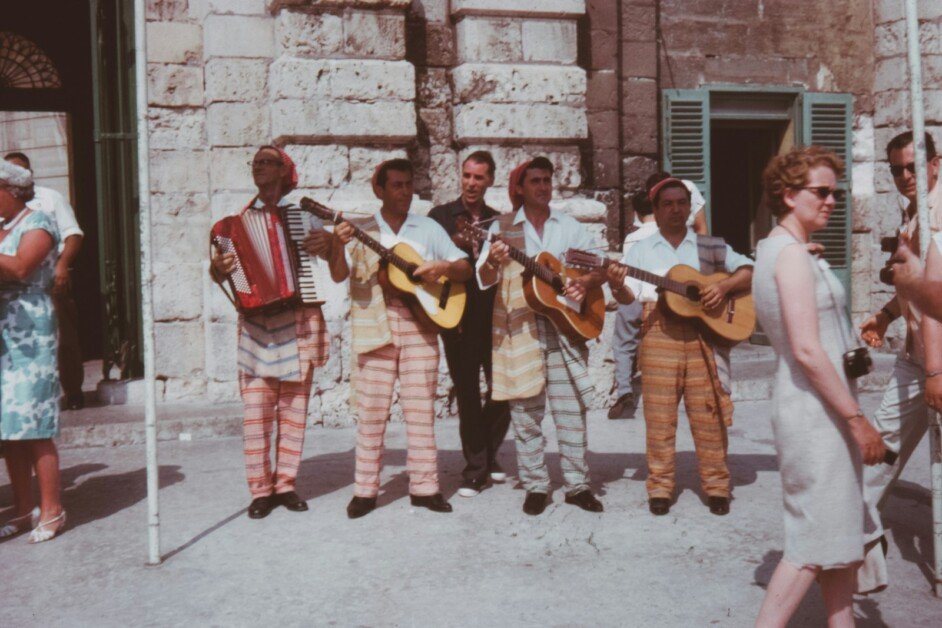
By the middle of the 19th century, mariachi was the sonic heart of life on rural haciendas. Musicians would travel from hacienda to hacienda, often by mule or on foot, wearing simple white cotton clothing and leather sandals. They provided entertainment for wealthy landowners during celebrations, fiestas, and important events. Life wasn’t glamorous, but mariachi players were essential to rural Mexican culture.
A Time of Wandering Musicians
Mariachis could be seen wearing traditional workmen’s clothes – white pants and shirt and a straw hat, and traveling around looking for work. During this period, mariachi groups remained small—usually just four musicians—and they played wherever they could find an audience. Some performed at village festivals, others at weddings and religious celebrations. They set up their wooden platforms (tarimas) and played the traditional sones and jarabes that people loved to dance to.
Regional Variations Flourish
One cool thing about 19th-century mariachi is how different regions developed their own unique sounds. Remember how we mentioned the two main styles earlier? In central Jalisco around Cocula, groups stuck with violins, vihuela, and guitarrón. Meanwhile, down in southern Jalisco and neighboring Michoacán, musicians preferred violins, harp, and the guitarra de golpe.
These regional differences weren’t just about instruments—they also affected the style of music, the rhythms, and even the stories told in songs. Each area put its own stamp on mariachi, kind of like how different regions of Mexico have their own traditional celebrations and customs.
Adding European Influences
As the 19th century progressed, mariachi musicians started incorporating new musical styles from Europe and beyond. Groups began to incorporate other music into their repertoires, including waltzes and polkas. Why? Because that’s what people wanted to hear! Mariachi has always been a living, breathing tradition that adapts to what audiences enjoy.
These European dance forms mixed beautifully with traditional Mexican rhythms, creating something that was neither purely European nor purely indigenous—it was uniquely Mexican. Polkas became faster and more energetic when played mariachi-style, and waltzes took on a distinctly Mexican flavor.
A Historic Performance Changes Everything
The year 1905 marked a major turning point. A mariachi ensemble led by Justo Villa played for President Porfirio Díaz during Independence Day celebrations in Mexico City. This performance brought mariachi from the countryside to the national stage for the first time. Suddenly, this rural folk music caught the attention of Mexico’s urban elite and political leaders.
This wasn’t just a cool concert—it was the beginning of mariachi’s transformation from regional music to a national symbol. The music that farm workers and rural villagers had been playing for generations was about to become the sound of Mexico itself.
The First Recordings
In autumn of 1908, four musicians from Cocula, Jalisco, known as the Cuarteto Coculense or Mariachi de Justo Villa, became the first mariachi to make phonograph recordings according to Mariachi Spectacular. They recorded about 60 songs for Edison, Victor, and Columbia record labels in Mexico City. For the first time ever, mariachi music could be preserved and shared beyond live performances!
These early recordings captured the authentic sound of 19th-century mariachi—all strings, no trumpets, with that raw, energetic quality that made it so appealing. Unfortunately, when the Mexican Revolution broke out in 1910, the recording companies left Mexico, and it would be nearly two decades before mariachi would be recorded again.
By the end of the 19th century, mariachi had evolved from scattered regional traditions into a more unified style. But the biggest changes were still to come in the next century, when revolution, radio, and movies would transform mariachi into Mexico’s most famous musical export!
The Golden Age (1930s-1950s)
The 1930s through 1950s are often called mariachi’s “Golden Age”—and for good reason. This is when mariachi transformed from a regional folk tradition into Mexico’s musical calling card to the world. Three game-changing innovations made this possible: radio, movies, and one legendary group that set the standard for everything that followed.
Mexico City Becomes Mariachi Central
Around 1920 Cirilo Marmolejo moved his group from Tecolotlán, Jalisco to Mexico City, becoming one of the very first mariachis to establish itself permanently there. In 1923, the cantina Salón Tenampa opened on what is now Plaza Garibaldi, where the mariachis of Concho Andrade and Cirilo Marmolejo performed. This plaza quickly became the heartbeat of mariachi music—and it still is today!
Imagine mariachi musicians gathering in the plaza every day, waiting to be hired for everything from serenades to weddings to parties. Plaza Garibaldi became the place where mariachi groups competed for gigs, refined their craft, and developed new styles. It was like the ultimate mariachi marketplace!
The Group That Changed Everything: Mariachi Vargas de Tecalitlán
Remember Mariachi Vargas de Tecalitlán, founded back in 1898? Well, they were about to become legends. In the 1930s, leadership was taken over by Silvestre Vargas, considered the greatest mariachi organizer and visionary of all time. In 1934, the group moved permanently to Mexico City, and everything changed.
What made Mariachi Vargas different? The group was something of an oddity in the early 1930s; the members were all dressed in charro suits, they showed up on time for performances, and they were sober. While other groups wore simple peasant clothes and operated casually, Mariachi Vargas was professional, polished, and perfectly coordinated.
In 1933, they won first place in a mariachi contest in Guadalajara—even though they were possibly the smallest and most modestly dressed group competing! Shortly after, Mariachi Vargas traveled to Mexico City, performing at the inaugural ceremony of President Lázaro Cárdenas. This performance put them on the national map.
The Fancy New Outfit: The Traje de Charro
When for the first time mariachis could afford to outfit themselves elegantly, they chose the suit of the horseman or traje de charro. This wasn’t just any outfit—it was the elaborately decorated suit that wealthy Mexican cowboys and hacienda owners wore, complete with tight-fitting pants, short jackets, embroidered belts, boots, wide bow ties, and those iconic wide-brimmed sombreros.
Why the charro suit? It connected mariachi to Mexican nationalism and pride. The charro represented courage, masculinity, and traditional Mexican values—perfect symbols for a country trying to forge a strong national identity after the Mexican Revolution. Just like the Mexican flag’s eagle symbolizes strength and resilience, the charro suit became a visual representation of Mexican pride.
Radio Brings Mariachi to the Masses
XEW, a powerful radio station in Mexico City during the 1930s, broadcasted Mariachi music serving to popularize it throughout Mexico. Suddenly, people across the entire country could hear mariachi music in their homes. Radio was a game-changer—it took music that had been limited to those who could attend live performances and made it available to millions.
This is also when mariachi groups started accompanying famous singers. Instead of being the main attraction, mariachis became the perfect backing band for ranchera vocalists, helping to create that classic Mexican sound we all recognize today.
The Movies Made Mariachi Stars
The “golden age of cinema” (1930s to 1950s) promoted a nationalist image of Mexico that drew on idealized images of rural life, best represented by the proud and courageous image of the charro (cowboy) from Western Mexico. Pedro Infante and Jorge Negrete rose to fame singing música ranchera (country music), often accompanied by Mariachi ensembles in their films.
The 1937 film Así es mi Tierra was the first of almost 200 motion pictures that Mariachi Vargas would eventually appear in. These weren’t just background appearances—mariachi music was central to the films’ identity. The movies romanticized rural Mexican life, featuring singing cowboys, passionate love stories, and lots of tequila, with mariachi providing the emotional soundtrack.
The Trumpet Finally Arrives!
Here’s a huge moment in mariachi history: In 1941, the group definitively integrated the trumpet into their musical interpretations with Miguel Martínez Domínguez as the first trumpet player. He is considered the creator of the mariachi-style trumpet as well as its best performer.
Why add trumpets? They made mariachi louder and brighter—perfect for radio broadcasts and movie soundtracks. The trumpet gave mariachi that bold, attention-grabbing sound that could cut through static on the radio and reach audiences in large theaters. It also reflected the influence of jazz and Cuban music, which were hugely popular at the time.
In 1944, Rubén Fuentes, a classical violinist with no background in mariachi music, was asked by Silvestre to join the group as music arranger. Fuentes brought formal musical training to mariachi, writing arrangements that were sophisticated while staying true to traditional roots. Together, Silvestre Vargas and Rubén Fuentes modernized and standardized mariachi music, creating the blueprint that groups still follow today.
By the 1950s, the modern mariachi sound was set: multiple violins, two trumpets, guitarrón, vihuela, and guitar. Mariachi had gone from rural folk music to Mexico’s proudest cultural export, recognized and loved around the world!
Mariachi Goes Global (1960s-Present)
By the 1960s, mariachi music was ready to conquer the world—and it did! What started in the rural villages of Jalisco had become an international sensation, spreading far beyond Mexico’s borders and adapting to new cultures while keeping its heart and soul intact.
Mariachi Comes to the United States
During the late 1950s and early 1960s, a number of organized mariachi groups immigrated to Los Angeles, an urban area that has in many ways become to the United States what Mexico City is to Mexico as an urban Mecca of mariachi music. Los Angeles, with its large Mexican and Mexican-American population, became the perfect home for mariachi to flourish north of the border.
In 1961, violinist Nati Cano founded Mariachi Los Camperos, which became one of the most respected mariachi groups in the United States. In 1969, Cano opened La Fonda de Los Camperos—the first restaurant to feature a first-class mariachi stage show. This concept revolutionized how Americans experienced mariachi, making it accessible in an entertaining, dinner-theater format.
The Chicano Movement Embraces Mariachi
The wave of immigration from rural Northern and Western Mexico to the U.S. in the 1930s and during the Bracero Program of WWII led to a greater presence of Mexicans in the American Southwest. As the Chicano civil rights movement gained momentum in the 1960s and 70s, mariachi became a powerful symbol of Mexican-American identity and cultural pride.
UCLA formed the first University-based Mariachi group (Mariachi Uclatlán) in 1961, and the first formal Mariachi class was introduced in the UCLA Ethnomusicology Department in 1964. This was groundbreaking! For the first time, mariachi was being taught in a formal educational setting, giving it the same academic respect as classical music.
Mariachi in Schools Changes Everything
By the late 1960s, mariachi music was being taught in several Los Angeles-area public schools, and mariachi classes soon spread to other parts of southern California. In Texas, after the Bilingual Education Act passed in 1968, the San Antonio Unified School District began offering Mariachi courses in the early 1970s.
This educational movement was huge. Mariachi programs have grown exponentially in U.S. public schools over the past 30 years, from just a handful of programs in a few states to more than 500 today. Students of all backgrounds—not just those with Mexican heritage—were learning to play mariachi music, sing in Spanish, and appreciate this beautiful tradition.
Just like how Mexican cultural symbols unite people across different backgrounds, mariachi education programs bring diverse students together through music.
Linda Ronstadt’s Game-Changing Album
Then came 1987, when rock superstar Linda Ronstadt did something unprecedented. Ronstadt released Canciones de mi Padre, an album of Mexican traditional Mariachi music that immediately became a global smash hit. At 2½ million US sales, it stands as the biggest selling non-English language album in American record history.
Ronstadt, who grew up in Tucson hearing her father sing traditional Mexican songs, assembled an all-star team. The album featured backing by the world-famous Mariachi Vargas, under the musical direction of Rubén Fuentes, and used the three best Mariachi bands in the world: Mariachi Vargas, Mariachi Los Camperos and Mariachi Los Galleros de Pedro Rey.
The album won a Grammy Award and introduced millions of non-Hispanic Americans to authentic mariachi music for the first time. It showed that mariachi could be commercially successful and artistically respected in the mainstream American music industry.
UNESCO Recognition: World Heritage Status
The ultimate honor came in 2011. UNESCO added mariachi music to its Representative List of cultural heritages worthy of national and international safe-guarding. This means UNESCO officially recognized mariachi as an Intangible Cultural Heritage of Humanity—one of the world’s most important cultural traditions that needs to be protected and preserved.
According to this declaration, the mariachi is a living heritage that provides a sense of identity to its community. This wasn’t just an award—it was global recognition that mariachi represents something precious and irreplaceable in human culture.
Women Break Barriers
In the United States in the 1960s, 1970s, and 1980s, big changes were afoot: feminism brought new participation of women in “non-traditional” roles, and the diversification of music education in many colleges, schools, and community programs embraced mariachi as a worthy music to study and perform by all.
All-female mariachi groups like Mariachi Reyna de Los Angeles (founded in 1994) proved that women could excel in what had traditionally been a male-dominated field. Today, female mariachi musicians are celebrated worldwide, breaking stereotypes and expanding what mariachi can be.
Mariachi Around the World
Today, you can find mariachi groups in the most unexpected places—Sweden, Croatia, Japan, Egypt, and beyond! Mariachi festivals attract thousands of people annually, from the Mariachi Spectacular in Albuquerque to the International Mariachi Festival in Guadalajara. The music that once played on wooden platforms in rural Mexican villages now fills concert halls and stadiums across the globe.
Mariachi has truly become a world music, loved and performed by people of all backgrounds while remaining deeply connected to its Mexican roots!
Conclusion
The history of mariachi music is a beautiful story of cultural fusion, evolution, and resilience. From its humble beginnings on rural haciendas in 18th-century Jalisco to its recognition as UNESCO Intangible Cultural Heritage, mariachi has captured hearts around the world.
We’ve traced mariachi’s journey through centuries of change—from small string ensembles in peasant clothing to the sophisticated, trumpet-enhanced groups in elaborate charro suits that we know today. We’ve seen how Mariachi Vargas de Tecalitlán standardized the modern sound, how Golden Age cinema spread the music globally, and how pioneers like Linda Ronstadt introduced millions of Americans to mariachi’s beauty.
But mariachi is more than just its history. It’s a living, breathing tradition that continues to evolve. Women are breaking barriers in what was once a male-dominated field. Students around the world are learning mariachi in school programs. New groups are forming in countries far from Mexico, proving that mariachi’s emotional power transcends borders and languages.
Whether you’re hearing it for the first time or you grew up with it, mariachi music speaks to something universal: love, loss, celebration, pride, and the connections that make us human. The soaring trumpets, weeping violins, rhythmic strumming, and passionate vocals combine to create something magical—a sound that makes you want to dance, cry, and celebrate all at once.
So the next time you hear those opening trumpet notes or that distinctive grito, remember the rich history behind the music. Think about the indigenous musicians who adapted Spanish guitars, the revolutionaries who carried songs across Mexico, the immigrants who brought mariachi to new lands, and the countless musicians who have dedicated their lives to preserving and evolving this beautiful tradition.
Mariachi isn’t just music—it’s cultural heritage, emotional expression, and community celebration all rolled into one. It’s Mexico’s gift to the world, much like the Mexican flag represents the nation’s pride and identity. And now that you understand its history, you can appreciate mariachi music on a whole new level.
¡Que viva el mariachi!
Frequently Asked Questions
Q. Where did the word “mariachi” come from?
A. The exact origin is still debated! The most popular theory used to be that "mariachi" came from the French word "mariage" (marriage) because groups performed at weddings. However, this has been proven false—documents show the word was used before the French occupation of Mexico in the 1860s.
Q. How many musicians are in a typical mariachi group?
A. The traditional mariachi has six to eight violins, two to three trumpets, one vihuela, one guitar, and one guitarrón. That's usually between 8-12 total musicians. However, smaller groups can have as few as 4-5 members, while some professional groups have even more.
Q. Why do mariachi groups wear those fancy outfits?
A. Those elaborate suits are called traje de charro, and they're based on the traditional outfit of Mexican horsemen (charros) from Jalisco. Early mariachis dressed in peasant garb (usually white), though since the early 20th century male mariachi bands typically have worn traje de charro—matching uniforms with tight, ornamented trousers, boots, wide bow ties, sombreros, and short jackets. The suits became popular in the 1920s and 1930s as mariachi became more professional. They represent Mexican national pride and the cowboy heritage of western Mexico.
Q. Can women be mariachi musicians?
A. Absolutely! The traditional ensemble was all-male, but since the 1940s women have played an increasing role in mariachi performance, and by the early 21st century there were a number of all-female mariachi groups.
Q. What’s the difference between mariachi and ranchera music?
A. This can be confusing! Ranchera is actually a type of song that mariachi groups perform. It is possible to use the terms mariachi and ranchera interchangeably, though they have different meanings—mariachi refers to a Mexican folk music tradition within a larger genre called ranchera music. Think of it this way: mariachi is the ensemble/band, while ranchera is one of the many song styles they play (along with boleros, sones, huapangos, etc.).