Day of the Dead Meaning: A Complete Guide to the History and Origins
If you’ve ever wondered about the true Day of the Dead meaning, you might be surprised to learn that it has almost nothing to do with being scared. When most people see skeletons, skulls, and cemeteries, they naturally think of Halloween. But if you look closer, you’ll notice that the skeletons aren’t trying to spook you—they are dancing, playing guitars, and wearing fancy hats. That is the first clue that this holiday, known in Spanish as Día de los Muertos, is actually a celebration of life, not death.
At its core, the Day of the Dead is about memory. It is a joyful time when families welcome back the souls of their deceased relatives for a brief reunion that includes food, drink, and celebration. In fact, the tradition is so unique and culturally significant that UNESCO added it to the Representative List of the Intangible Cultural Heritage of Humanity in 2008.
However, the holiday we see today is complex. It isn’t just one thing; it is a mixture of ancient Aztec rituals and Catholic traditions brought over by the Spanish. As the Smithsonian Institution explains, this blend of cultures (called syncretism) is what makes the holiday so special. In this guide, we are going to look past the colorful makeup and costumes to uncover where these traditions came from—starting thousands of years ago with the Aztecs.
The Ancient Roots: It Started with the Aztecs
To truly understand the Day of the Dead meaning, we have to rewind the clock about 3,000 years to the time of the Aztecs and other Nahua people living in what is now central Mexico. While many cultures fear the end of life, the Aztecs had a completely different philosophy. They believed that life on earth was actually a dream and that only in death did a person truly wake up.
For the Aztecs, death wasn’t an end point; it was the start of a long and challenging journey. They believed that most spirits had to travel through nine levels of the underworld, known as Mictlán, to reach their final resting place. This journey was difficult—spirits had to face challenges like “obsidian-bladed winds” and crashing mountains. This is why the living provided food and water for the deceased: it wasn’t a birthday party, but a survival kit for their soul’s trek. You can read more about the specific geography of this underworld in this guide to Mictlán and its inhabitants.
This original celebration looked very different from what we see today:
The Timing: It didn’t happen in November. It was originally a month-long harvest festival that took place in August (the ninth month of the Aztec calendar).
The Host: The festivities were presided over by the goddess Mictecacihuatl, known as the “Lady of the Dead.” As the World History Encyclopedia explains, she ruled the underworld alongside her husband and was tasked with watching over the bones of the dead.
In modern times, the spirit of Mictecacihuatl has evolved into the elegant skeletons we see in parades, but her original purpose was serious. She ensured that the cycle of life continued and that the spirits were respected, setting the foundation for the deep respect shown to ancestors today.
The Colonial Clash: When Two Worlds Collided
The next major shift in the Day of the Dead occurred in the 16th century when Spanish Conquistadors arrived in Mexico. The Spanish brought with them the Catholic faith, and when they saw the indigenous people performing rituals with skulls and honoring death, they viewed it as pagan and sacrilegious. They tried their best to stamp out the tradition, but the roots were too deep to be destroyed completely.
Instead of disappearing, the festival underwent a massive transformation—a process historians call syncretism. This is when two different cultures blend to create something entirely new. To make the ritual more acceptable to the Church, the Spanish moved the celebration from the summer to coincide with two major Catholic holidays in November: All Saints’ Day and All Souls’ Day.
This merger created the two-day schedule that is celebrated today:
November 1st (All Saints’ Day): This day became known as Día de los Inocentes (Day of the Innocents) or Día de los Angelitos (Day of the Little Angels). It is dedicated to remembering children who have passed away.
November 2nd (All Souls’ Day): This is the actual Día de los Muertos, dedicated to honoring deceased adults.
As Britannica notes in their overview of All Saints’ Day, this Catholic influence shifted the focus toward praying for the souls of the faithful. However, the indigenous spirit remained. While the dates and prayers became Catholic, the way people celebrated—with vibrant food, marigolds, and offerings—remained distinctly Aztec. The result was a unique compromise: the Spanish got their dates, but the indigenous people kept their spirit.
The 20th Century: Satire, Art, and Identity
If you look at the modern Day of the Dead meaning and imagery, one figure stands out above the rest: the tall, elegant skeleton wearing a fancy hat. She is known as La Catrina, but she hasn’t been around forever. In fact, she was created in the early 1900s as a political joke!
The character began as a simple etching by the Mexican printmaker and illustrator José Guadalupe Posada. He originally called her La Calavera Garbancera. At the time, “garbanceros” were people with indigenous blood who sold chickpeas (garbanzos) and tried to pass themselves off as European, denying their own Mexican heritage. Posada drew the skeleton wearing only a large, French-style hat to mock people who were ashamed of their roots. You can view the original etching in The Metropolitan Museum of Art’s collection.
However, it was the famous muralist Diego Rivera who turned her into the icon we know today. In 1947, Rivera painted his masterpiece Dream of a Sunday Afternoon in the Alameda Central. In this mural, he took Posada’s sketch and gave her a full body, an elegant dress, and a feather boa. He placed her right in the center of the painting, holding hands with Posada on one side and a child version of Rivera on the other. You can explore the details of this massive mural in this deep dive by Khan Academy.
Rivera is the one who named her La Catrina (based on the slang word “catrín,” meaning a dandy or well-dressed person). Through this art, the meaning of the skeleton evolved. It was no longer just a political jab; it became a symbol of Mexican identity and a reminder of a powerful truth: Death is the great equalizer. As Posada famously said, “Death is democratic.” Underneath our fancy clothes or expensive hats, we are all just skeletons.
Deconstructing the Altar: Meaning Behind the Objects
If you walk into a Mexican home during late October, you will likely see a beautiful, tiered table filled with photos, food, and flowers. This is the ofrenda (altar), and it is the heart of the celebration. It is important to clarify the Day of the Dead meaning here: the altar is not for worshiping the dead as gods. Instead, think of it as a welcoming station or a landing pad. It is prepared to make the spirits feel comfortable and loved after their long journey back home.
Every single item placed on the altar serves a specific purpose, often representing the four elements (earth, wind, water, and fire) or guiding the soul. Here is a breakdown of the most common items and what they signify:
Cempasúchil (Marigolds): You will see these bright orange flowers everywhere. They aren’t just for decoration! The Aztecs believed that the vibrant color and strong scent of the marigold helped guide the spirits home. Families often strip the petals to create a pathway leading from the street to the altar. You can read more about the meaning behind the marigold and other objects in this article by Smithsonian Magazine.
Pan de Muerto (Bread of the Dead): This is a sweet bread made specifically for the holiday. If you look closely at the top, you will see strips of dough arranged in a cross shape. This represents the bones of the deceased, while the small ball in the center represents the skull.
Papel Picado: These are the colorful, intricate tissue paper banners you see strung up in streets and homes. While they look festive, they represent the element of Wind. When the paper moves, it is said that the spirits are arriving.
Sugar Skulls (Calaveritas): Unlike Halloween skulls, these are decorated with colorful icing, glitter, and smiles. They represent the sweetness of life and are often given as gifts to the living.
Water and Salt: A glass of water is always placed on the altar to quench the thirst of the spirit after their journey, while salt is used for purification.
For a deeper look at the symbolism of these items, check out this detailed guide to symbols and traditions provided by The Grace Museum.
Day of the Dead Today: UNESCO and Global Fame
In the last twenty years, the Day of the Dead has gone global. What used to be a local tradition celebrated mostly in Central and Southern Mexico has become a worldwide phenomenon. This shift is partly due to international recognition. In 2008, UNESCO added the festivity to its Representative List of the Intangible Cultural Heritage of Humanity. This was a huge deal because it officially recognized the holiday as a treasure that needs to be protected and preserved.
Pop culture has also played a massive role in teaching the world about this tradition:
The “Coco” Effect: The 2017 Disney/Pixar movie Coco was a love letter to Mexican culture. It helped millions of children (and adults) understand that the holiday is about family and memory, not fear.
The James Bond Effect: Believe it or not, the massive Day of the Dead parade you now see in Mexico City every year didn’t exist before 2015! It was actually invented for the opening scene of the James Bond movie Spectre. The scene looked so cool that the city decided to make it a real annual tradition. You can read the fascinating story of how James Bond inspired the modern parade in the L.A. Times.
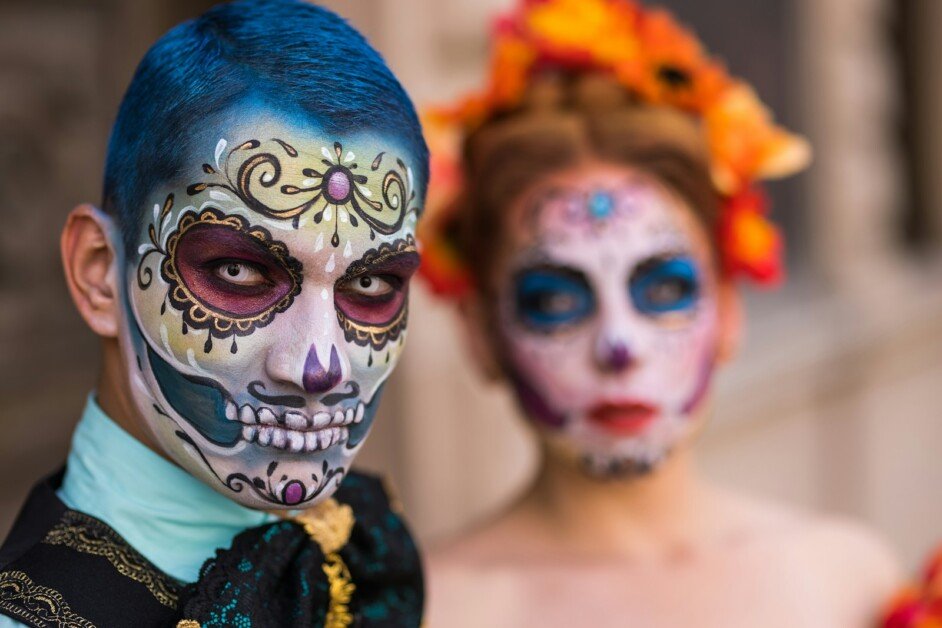
A Note on Respect With all this popularity comes a responsibility. If you choose to participate—perhaps by painting your face or setting up an altar—it is important to do so with respect. Remember that for many people, this isn’t a costume party; it is a deeply spiritual time to cry, laugh, and remember the people they miss the most.
Conclusion
As we have explored, the true Day of the Dead meaning is far richer than just face paint and parties. It is a story of survival—a tradition that began with the Aztecs, survived the Spanish conquest, and evolved into a global celebration of love.
While death is often a taboo subject that people try to ignore, this holiday teaches us a healthier way to handle it. It reminds us that death is not the opposite of life, but a part of it. By building altars, sharing stories, and even laughing at death with whimsical skulls, we ensure that our loved ones are never truly gone. As the Mexican saying goes, a person dies three times: the first when their body stops functioning, the second when they are buried, and the third—the most tragic—when they are forgotten.
The Day of the Dead ensures that the third death never happens.
Frequently Asked Questions (FAQ)
Q: Is the Day of the Dead the same as Halloween?
A: No. While they share some similarities (like costumes and the time of year), their origins and meanings are totally different. Halloween has roots in the Celtic festival of Samhain and is often associated with warding off ghosts or being spooky. The Day of the Dead meaning is about welcoming spirits back with joy and love, not fear.
Q: Can I celebrate Day of the Dead if I am not Mexican?
A: generally, yes, as long as it is done with education and respect. Many Mexicans appreciate when others take the time to learn about their culture. However, treating it as just another "costume party" without understanding the meaning can be seen as cultural appropriation. Focus on the core value: remembering your own ancestors.
Q: What are the specific dates for Day of the Dead?
A: The holiday is celebrated over two main days. November 1st is typically dedicated to children (angelitos), and November 2nd is for adults. However, in many parts of Mexico, preparations and festivities can start days earlier, often merging with Halloween on October 31st.
Q: Why do people paint their faces to look like skulls?
A: This tradition is linked to La Catrina. Painting your face as a skull isn't meant to be scary; it is a way of acknowledging that we are all equal in death. It is a celebration of mortality rather than a fear of it.
Q: What is the best place in Mexico to see the celebrations?
A: While Mexico City has the famous parade, many travelers believe the most traditional and spiritual celebrations happen in the state of Michoacán (specifically Pátzcuaro) or in Oaxaca.